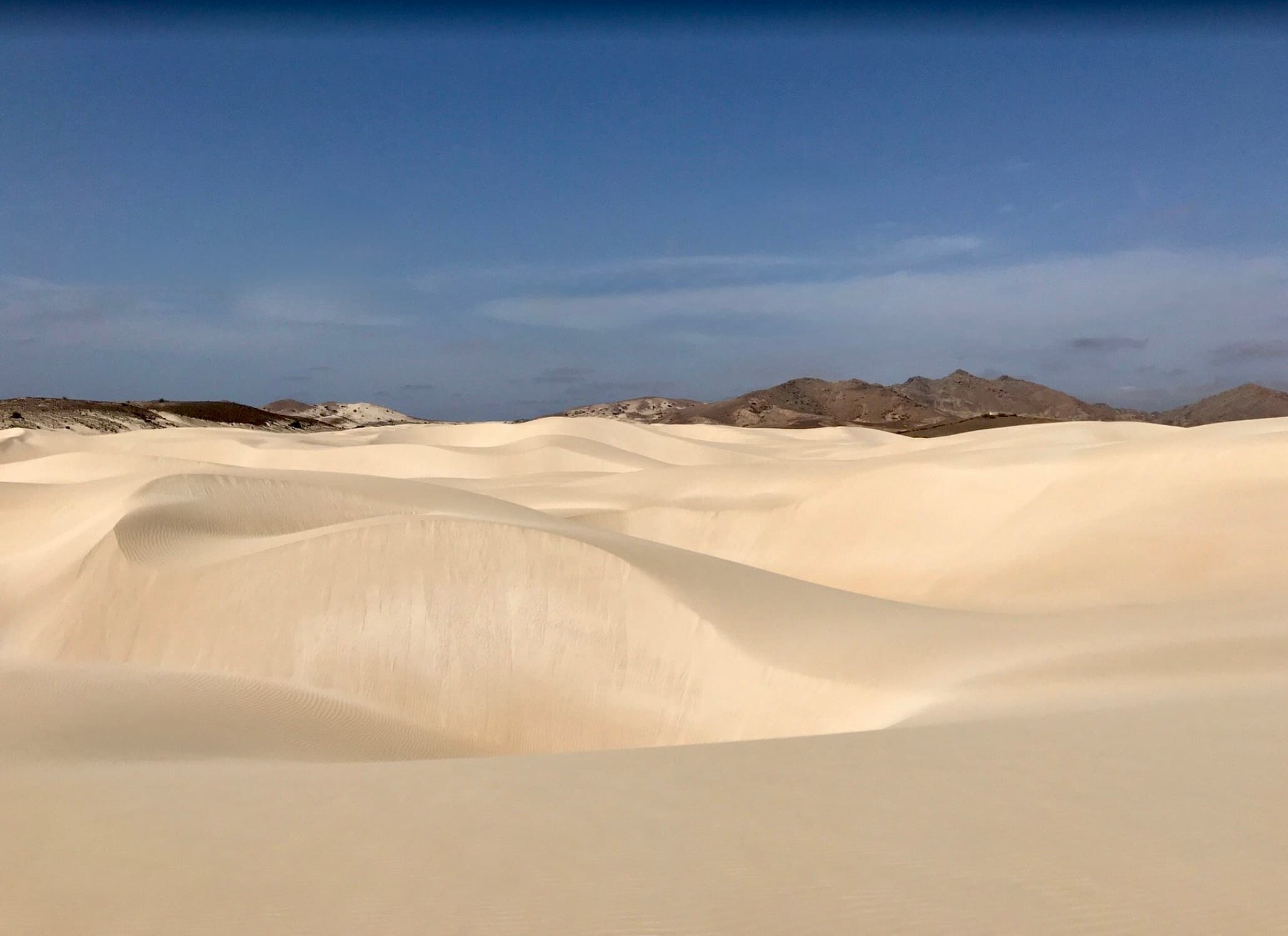
The Viana Desert is one of those places that surprised me the most. From a distance it looks surreal, almost intimidating, with rolling dunes that feel taller than they really are. Once you are walking among them, the scale shifts and the place becomes calm, open, and far easier to explore than it first appears.
Once there, we stopped the car, walked up and down, used a board to slide through the dunes, and even played football. My son loved it, and this part was one of the most memorable moments of the whole trip.
A piece of the Sahara in the Atlantic
The sand of the Viana Desert comes from the Sahara. It travelled all the way across the ocean to land here.
- The harmattan is a dry, dusty north-easterly trade wind that blows from the Sahara over West Africa and into the Gulf of Guinea.
- It carries fine particles across the Atlantic between late November and mid-March.
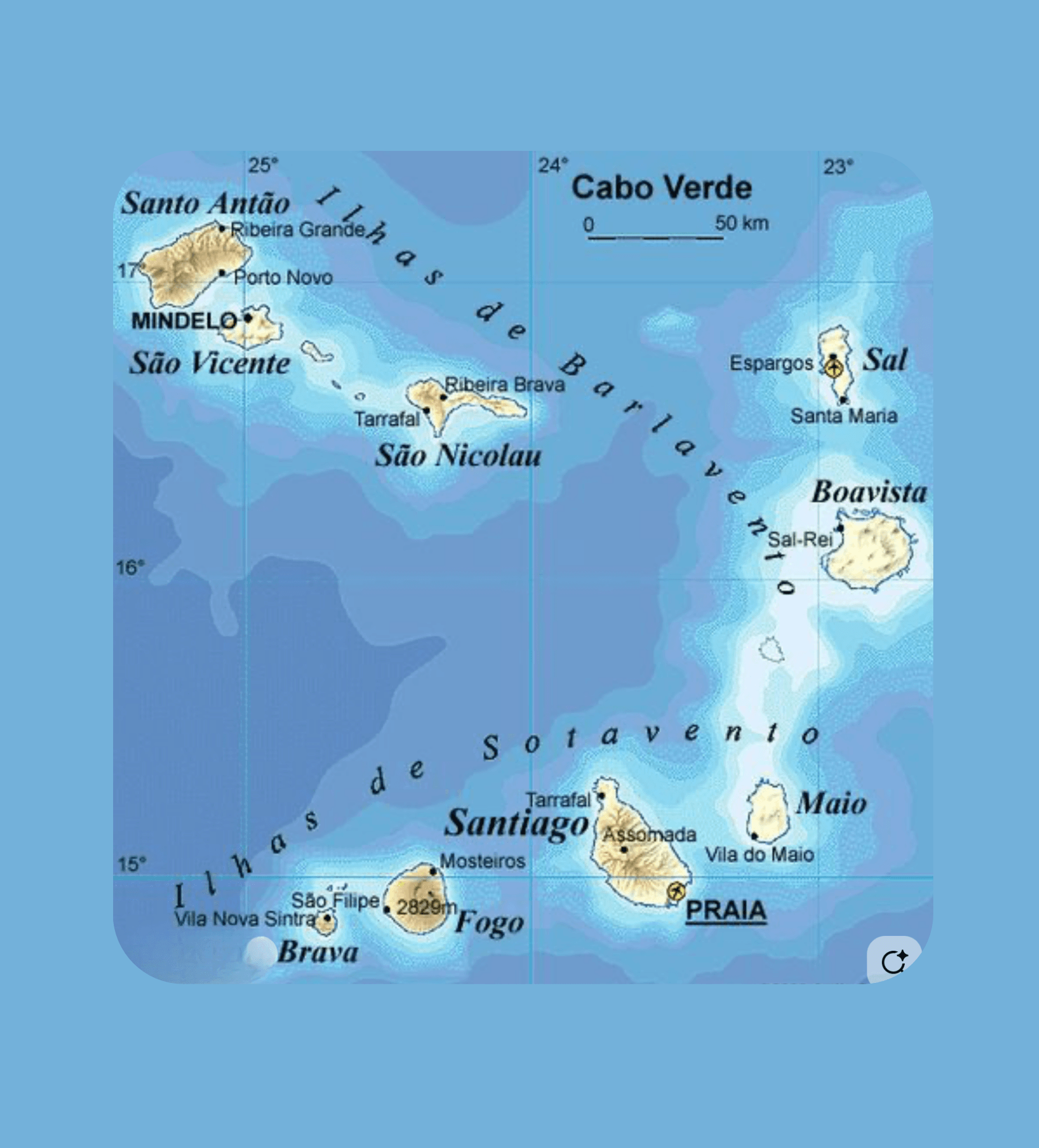
- Over centuries, those particles have accumulated on Boa Vista and shaped the desert we see today.
It is the same sand, the same wind, just landed on different shores.
You are standing on an island in the middle of the Atlantic, and yet under your feet is, quite literally, the Sahara.
The contrast you find across Cabo Verde is unique, unpredictable, and naturally stimulating.
Not as intimidating as it looks
The dunes look tall, especially when you are standing on top of one and looking down, but the experience of walking them is gentle and satisfying. The sand is soft, the slopes are easier than they appear, and the rhythm of moving up and down feels more like walking on a beach than crossing a desert. There is no dense vegetation, no sudden drops, just an open landscape that lets you slow down.
If you are anxious about deserts in general, Viana is a good introduction. It is small enough to feel safe and big enough to feel like something completely different from the rest of the island. Deep among the dunes is where you get that "wow", 360-degree, Instagrammable moment of being surrounded by sand on every side.
How to experience it
A short visit is enough to take it in, and a few small choices make a big difference.
- Go in the early morning or late afternoon, when the light is gentler and the heat is bearable.
- Bring water and avoid the middle of the day.
- Sandals or going barefoot tends to work better than closed shoes once you are on the soft sand.
- The Viana Desert is included in most of the guided tours around the island. On our tourism section you can find a list of guides that have this itinerary as part of their tours.
If you stay a little longer, the calming silence is what stays with you. Boa Vista already feels still compared to other islands, and the Viana Desert intensifies that quiet in a way that is hard to describe until you are standing in the middle of it.
What to remember
What makes the Viana Desert special is the atmosphere. The calm, golden dunes, and the unexpected feeling of finding a piece of the Sahara in the middle of the Atlantic create an experience that feels both peaceful and unforgettable.
How you can contribute
This article is part of a wider effort to gather Cape Verdean insights and facts online in a more dynamic way. It matters to me because growing up abroad meant never learning much of this in school, something many others in the diaspora can probably relate to.
If you feel you can contribute to any of these articles, or you spot something that should be rewritten, please email us at caboverdeplataforma@gmail.com.
I plan to introduce more features as the platform continues to grow. For now, if you enjoyed this article, feel free to share your thoughts on our Instagram post at @cvapp1.
Continue exploring CVApp
Browse more stories in Nature or return to the full blog archive.