Cabo Verde is often spoken about as a single destination, but in practice it behaves more like a collection of small, distinct worlds. Understanding how the islands are spread across the Atlantic is one of the simplest ways to travel better here.
Distances are not extreme, but they are meaningful. Each island has its own rhythm, landscape, and pace, and moving between them requires intention rather than spontaneity.
Two groups, different rhythms
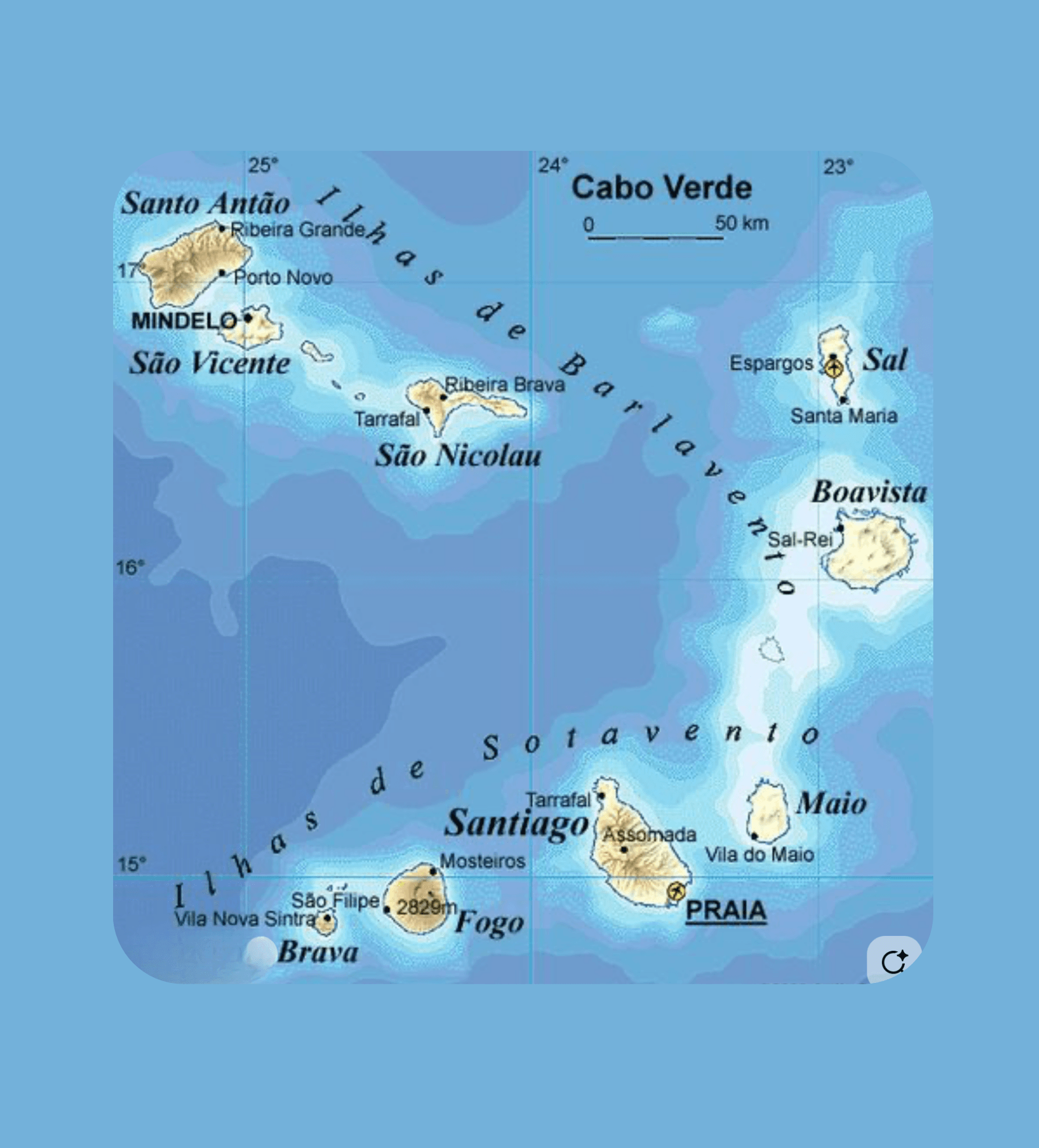
The archipelago is divided into two main groups: Barlavento (windward) and Sotavento (leeward). This is more than a geographic label. It subtly shapes climate, culture, and how time is experienced on each island.
- Barlavento islands (like Sal, Boa Vista, São Vicente) tend to be drier, windier, and more oriented around beaches and open landscapes.
- Sotavento islands (like Santiago, Fogo, Brava) often feel more grounded in agriculture, history, and varied terrain.
This division is useful when planning. It helps you avoid trying to “see everything” and instead choose a direction that matches your travel style.
Distance changes how you plan
Looking at a map, it is tempting to assume you can move freely between islands over a few days. In reality, inter-island travel requires coordination.
Flights are the most reliable option, while ferries exist but can be affected by weather and schedules.
A practical way to think about it
- Choose one primary island as your base.
- Add one additional island only if timing is comfortable.
- Leave space for delays rather than compressing your itinerary.
Trying to cover too many islands in a short time often leads to more time in transit than in place.
Cabo Verde rewards depth over coverage. One island understood well is better than three briefly visited.
Landscapes that shift quickly
One of the defining characteristics of Cabo Verde is how quickly the landscape changes from island to island.
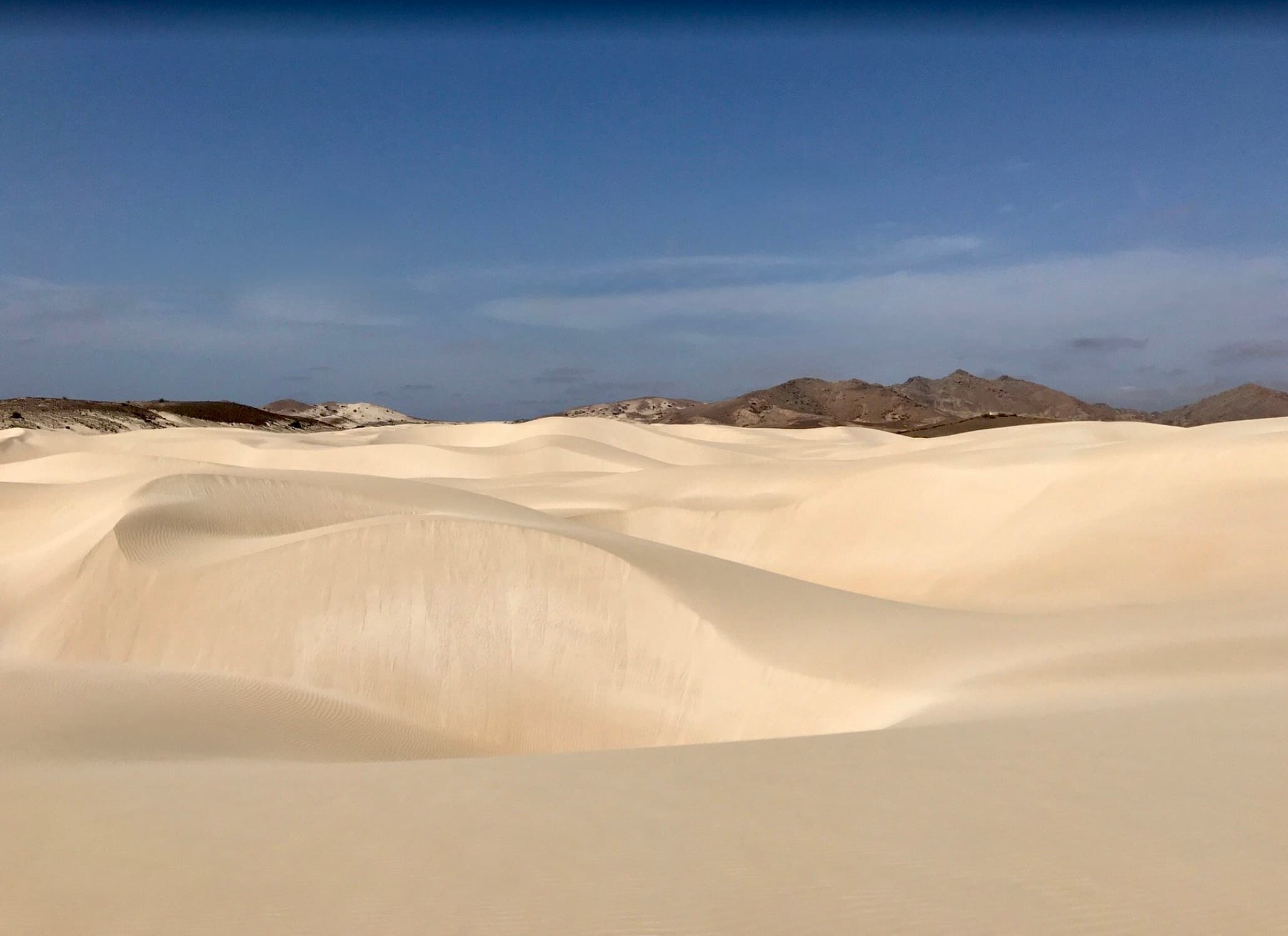
- Sal and Boa Vista offer flat, sandy terrain and long, uninterrupted beaches.
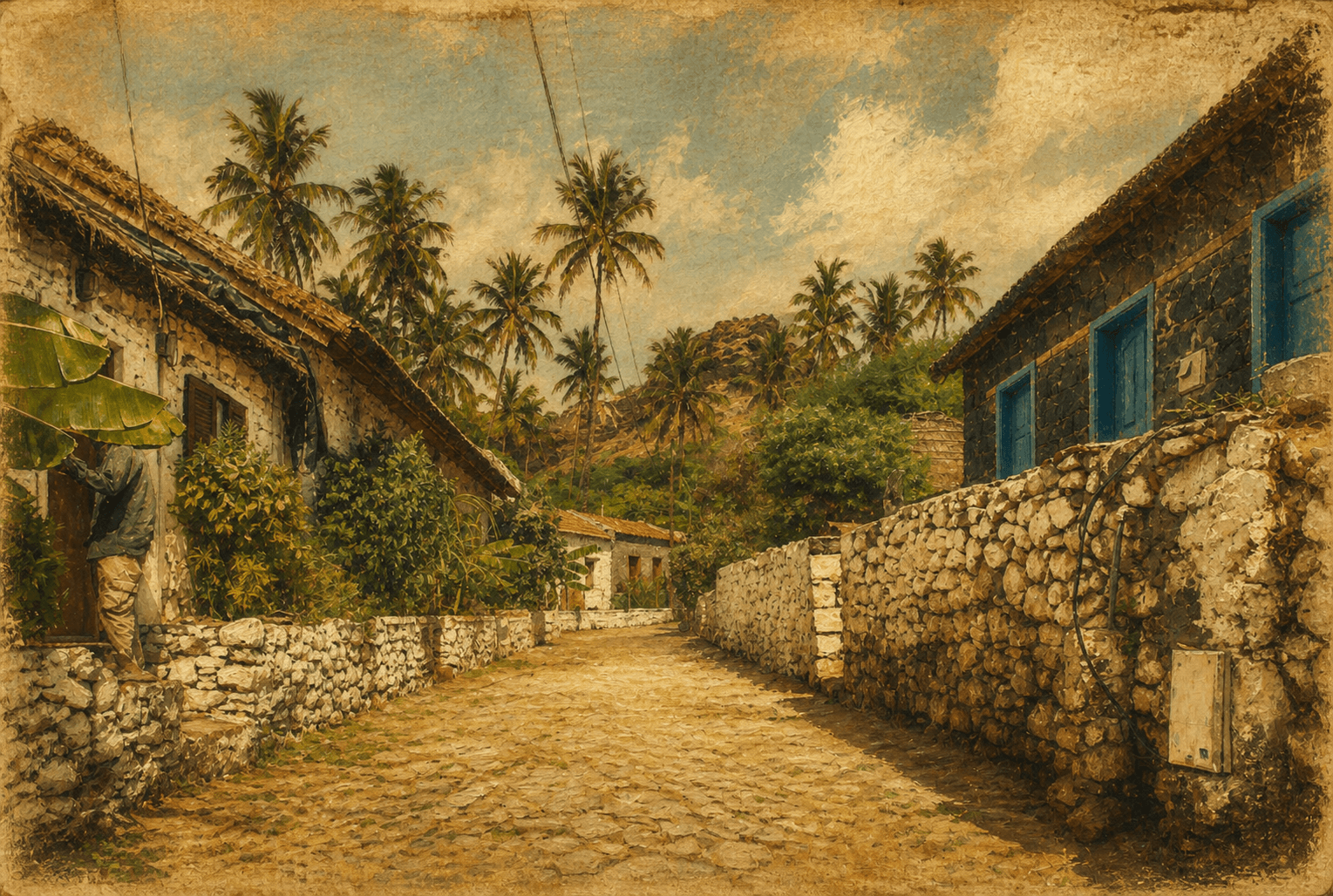
- Santiago introduces mountains, valleys, and a stronger sense of daily local life.
- Fogo brings volcanic landscapes that feel entirely different from the rest of the archipelago.
These contrasts are part of what makes the country compelling. You are not just changing location, you are shifting environment.
Culture follows geography
Geography in Cabo Verde is closely tied to identity. Music, food, and daily routines can feel noticeably different from one island to another.
- Port cities like Mindelo are shaped by movement, music, and nightlife.
- Agricultural areas reflect slower rhythms and stronger ties to land.
- Tourist-focused islands balance local life with international visitors.
For a short trip, you will only see a slice of this. That is expected. The goal is not completeness, but orientation.
What to remember
“Across the Islands” is not just a description of space. It is a reminder that Cabo Verde is experienced in parts, not all at once.
Plan with intention, choose your islands carefully, and allow each place enough time to feel distinct. If you leave with a clear sense of one island and curiosity about the others, you are approaching the archipelago the right way.
Continue exploring CVApp
Browse more stories in Travel Guides or return to the full blog archive.